Policy Dialogues & Consultations
Tax Justice for Education in Pakistan: Challenges and Way Forward

THEMES
Education Financing
Governance & Accountability
Right To Education
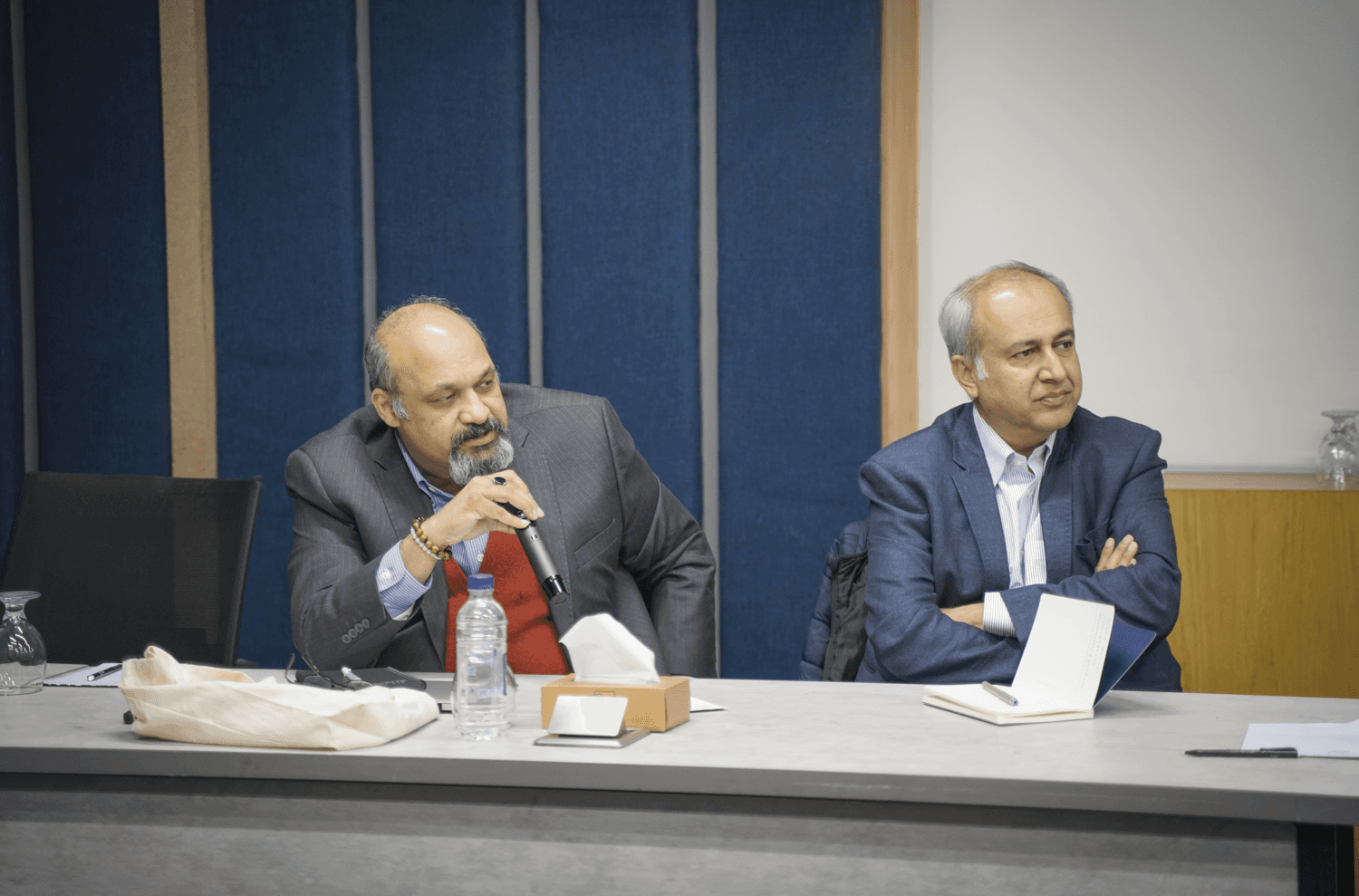
On 12 December 2024, PCE, in collaboration with the TaxEd Alliance, held a roundtable titled Tax Justice for Education in Pakistan: Challenges and Way Forward. It brought together a diverse group of stakeholders, policymakers, education advocates, tax experts, and civil society representatives, to work through the challenges of education financing and the role tax justice can play in solving them. The discussion centred on Pakistan's chronic underinvestment in education, the inefficiencies in its taxation system, and the urgent need for progressive reform, with participants deliberating on practical ways to mobilise resources for public education through fairer tax policy while tackling the socioeconomic disparities beneath it.
The roundtable was opened by Zehra Arshad (National Coordinator, PCE), who set out the pressing challenges posed by Pakistan's low education financing and mounting debt distress, and underscored the link between tax justice and education financing, a relatively new discourse in Pakistan. She framed the day's purpose plainly: to learn from international partners and to bring stakeholders together to advance the agenda at home. That international lens was provided by Ashina Mtsumi (Coordinator for the Tax and Education Alliance, ActionAid International), who shared successful case studies from Africa, and Cecilia "Thea" Soriano (Campaigns and Communications Manager, Global Campaign for Education), who shared GCE's learnings on education financing, taxation, and debt justice.
Key discussions
Education as a right beyond borders. With over 26 million children out of school and serious quality gaps for those enrolled, participants framed education as a fundamental human right, and pressed for regional collaboration among civil society in Pakistan, Nepal, Bangladesh, and India to share best practices, advocate for tax reform, and tackle educational inequities together.
Progressive taxation and stronger administration. A major focus was the need for progressive measures, including wealth taxes and levies such as a super tax, to generate sustainable resources for education, alongside stronger tax administration at local and federal levels. TaxEd shared Nepal's success in bringing taxpayers into digital systems and working with young parliamentarians and the media to improve fiscal policy.
Public trust and transparency. Participants identified the lack of public trust in government spending as a serious barrier, and recommended transparent mechanisms such as independent audits and public reporting on education-specific taxes to rebuild confidence that revenue actually reaches schools.
Engaging every stakeholder, and the global system. The discussion stressed involving parliamentarians, media, academia, and CSOs in the push for financing reform, and pointed to global tools such as the proposed UN Tax Convention as a way to combat corporate tax abuse and expand education funding.
Capacity and innovation. Participants called for capacity-building for CSOs and policymakers, and for innovative approaches such as digital tax systems and piloting education-specific taxes to improve financing and resource allocation.
Key remarks by speakers
"It's not a matter of not having money; it's a matter of prioritization and rethinking this whole thing. The strong are not taxed, while the weak, like salaried individuals, face advance and presumptive taxation before their salaries even reach them." Faisal Bari, Dean, LUMS School of Education
"A 30% increase in existing resources can be achieved without adding new taxes, just by improving how taxation is implemented across different sectors. Nearly 45% of potential tax revenues are lost due to exemptions, given away without any performance benchmarks. It's simply neglecting resources that could be invested in critical sectors like education." Mahmood Khalid, Senior Research Economist, Pakistan Institute of Development Economics (PIDE)
"Taxation is not a technical issue. This is a political issue. First of all, we need to take it to the public space. Instead of stealing the cake from the second person, increase the size of the cake." Pravesh Acharya, Member, TaxEd Alliance
"We need to start a conversation around equitable and progressive taxation, because the resources exist, but they are simply not being allocated where they are needed most." Areebah Shahid, Executive Director, Pakistan Youth Change Advocates (PYCA)
"There are significant regional and sectoral tax exemptions. We must address these exemptions to increase the tax-to-GDP ratio, ensuring a more equitable tax system." Mukhtar Ahmad Ali, Executive Director, Centre for Peace and Development Initiatives (CPDI)
"The tax administration system should be strengthened from the local to the federal level. Engaging young parliamentarians is essential, to educate and inform them about ground realities." Devendra Pratap Singh, Programme Development Manager, ActionAid International Nepal
"The solution is progressive taxation. Countries like Norway and Germany have successful models, but our system remains regressive." Saleem Khilji, Journalist
Policy recommendations The roundtable produced a detailed set of recommendations for policymakers:
Progressive taxation. Introduce wealth taxes on high-income individuals and corporations (targeting capital gains, real estate, and luxury assets); strengthen oversight to curb corporate tax evasion and ensure fair contributions from multinationals; and enforce compliance through automated audits and stricter penalties.
Fix VAT and cut exemptions. Expand and streamline VAT coverage, especially in under-regulated sectors like retail and services, and phase out the unnecessary tax exemptions that account for a large share of forgone revenue, redirecting those funds to education.
Raise and protect the education budget. Make education a national budgetary priority, targeting a consistent increase to at least 20% of public expenditure, with periodic reviews to ensure equitable distribution.
Spend it efficiently. Reallocate from non-essential areas, such as defence, toward social services in underfunded provinces, and establish independent, third-party audits to track fund use and prevent mismanagement.
Use the law. Pursue Public Interest Litigation demanding increased education funding and better infrastructure in underserved regions, and seek judicial oversight so that education rights recognised under the 18th Amendment are enforceable across all provinces.
Ease debt-servicing pressure. Negotiate debt relief with international creditors, linking reductions to greater social-sector investment, and channel the freed resources into education and health.
Engage global institutions. Partner with organisations such as the IMF and World Bank for targeted, transparently tracked education financing, and leverage networks like the proposed UN Tax Convention to combat corporate tax abuse.
Build public trust and alliances. Run nationwide awareness and "follow the money" campaigns, foster community dialogues for local accountability, empower CSOs to produce evidence-based proposals, and form multi-sector and regional coalitions for systemic reform.
Leverage technology. Pilot digital tax systems to improve collection and reduce leakages, and use data to track disparities in education financing and target interventions.
